
This is the November 2025 edition of my fascinating facts newsletter, which includes a range of interesting topics. This includes write-ups about getting old, the oldest tattoos, rags-to-riches stories and those that died a pauper.
Fascinating Facts November 2025 Contents
“Fascinating Facts” is a free monthly e-magazine focusing on personal, historical, and military interests. Contributions are welcomed with appropriate credit given. You can download the full newsletter to read HERE; however, some snippets are listed below.
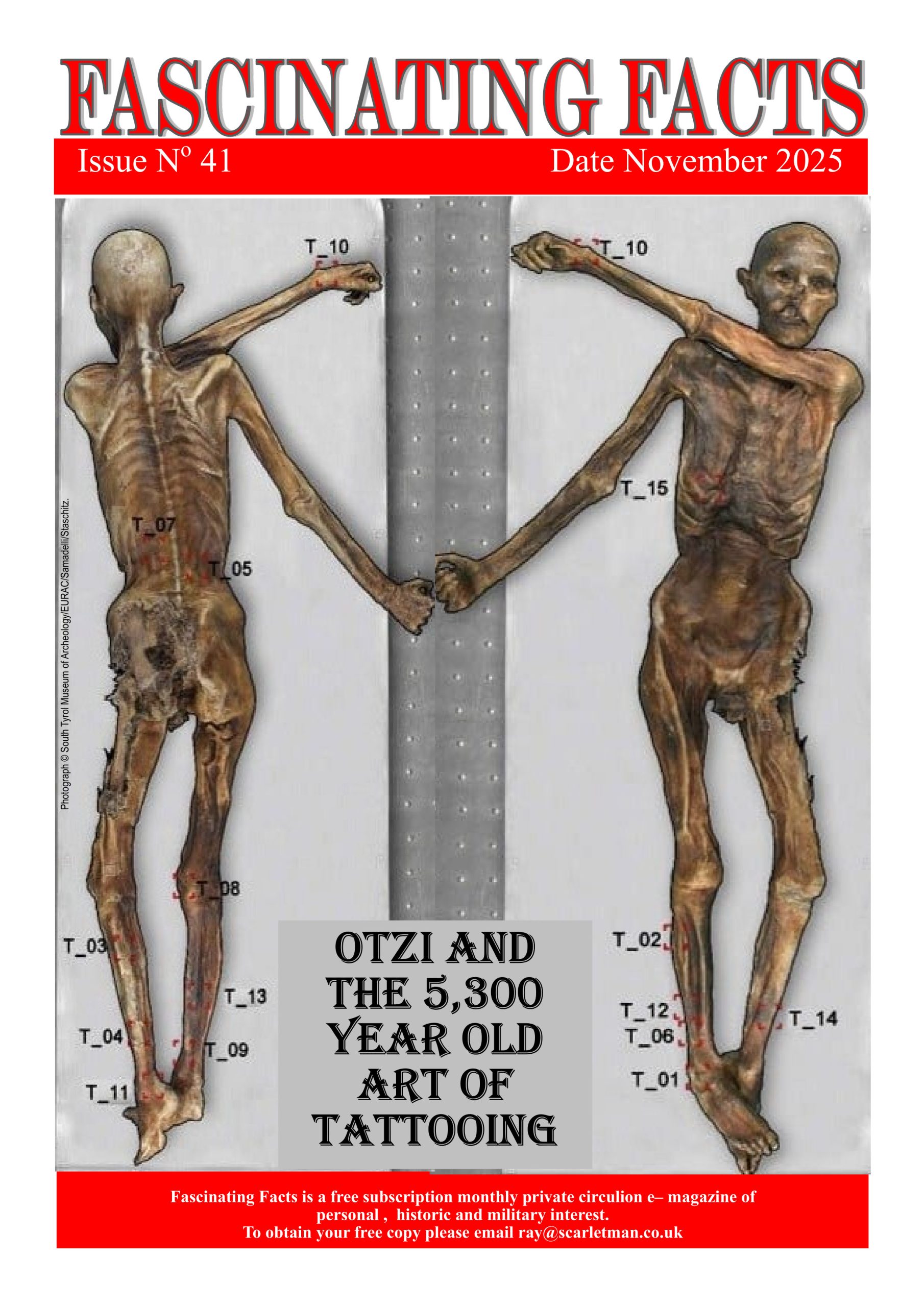
THE 5,300 YEAR OLD ART OF TATTOOING
Tattooing predates written history. The oldest confirmed examples are on Ötzi the Iceman, who died around 3250 B.C. with 61 tattoos likely used for medicinal or symbolic reasons. Tattooed mummies have been found across the world. Tattoos later gained a negative stigma when they were used as identification marks in Nazi concentration camps. Tattooed women then became popular in circuses during the late 19th and early 20th centuries. Read More…
LYCURGUS CUP
A rare 4th-century Roman glass cup made with dichroic glass that changes colour: green in reflected light and red when backlit. The colours come from microscopic particles of gold and silver embedded in the glass. The cup is elaborately carved with a scene of King Lycurgus being restrained by vines, showing highly advanced Roman craftsmanship. Read More…
THE NON-RUSTING IRON PILLAR OF DELHI
A 4th–5th century CE iron pillar that stands about 24 feet tall and weighs over six tonnes, famous for resisting rust for over 1,600 years. A protective chemical layer formed naturally on its metal surface. It was likely erected as a religious or commemorative monument and later moved to Delhi. A tradition claims that if someone hugs the pillar with hands meeting behind, their wish will come true.
THE 5000 YEAR OLD SABU DISK. COULD WE MAKE IT TODAY?
A mysterious stone object from a First-Dynasty Egyptian tomb dated 3000–2800 B.C. Made of fragile metaschist, shaped like a shallow bowl with three inward-curving lobes. Its purpose is unknown, with suggestions ranging from lamp to a ritual decoration to an object related to liquid or mechanical function. Modern replicas show it is aerodynamic but impractical as a propeller, adding to its mystery. Read More…
FATHERS OF DAYLIGHT SAVING TIME
The idea of adjusting to daylight hours existed in ancient times, but modern proposals came from George Vernon Hudson in 1895 in New Zealand and William Willett in 1907 in the UK. Willett campaigned heavily, but daylight saving was first implemented nationally in Germany and Austria-Hungary in 1916 during World War I. Today only about one-third of countries use daylight saving, with large regional differences. Read More…
NOT ALL HEARTS ARE THE SAME
Human hearts have four chambers, but other animals differ widely. Whales have enormous four-chambered hearts that slow dramatically during dives. Cephalopods like octopuses have three hearts and blue blood. Cockroaches have open circulatory systems with 12–13 heart chambers. Fish have additional structures and can regenerate heart tissue. Earthworms have five pseudo-hearts that squeeze vessels rather than pump. Heart structure adapts to each species’ lifestyle. Read More…
FROM RAGS TO RICHES
Many successful figures began in poverty but rose through perseverance, creativity, and opportunity. Examples include Oprah Winfrey overcoming abuse and poverty to become a media leader and philanthropist; J.K. Rowling going from welfare to becoming a bestselling author; Howard Schultz transforming Starbucks into a global empire; Ralph Lauren creating a fashion empire; Andrew Carnegie rising from factory work to steel magnate and philanthropist; Leonardo Del Vecchio growing from an orphanage to eyewear billionaire; and Ed Sheeran overcoming homelessness to become a global music star. Read More…
FAMOUS AND DIED A PAUPER
Some talented individuals lost fortunes due to health issues, addiction, mismanagement, taxes, or tragic circumstances. Franz Schubert died young with little money despite prolific composition. Vincent van Gogh struggled financially and sold almost no art in life. Joe Louis lost vast boxing earnings to taxes and medical costs. Bela Lugosi suffered from addiction and died nearly broke. Oscar Wilde died impoverished in exile. Judy Garland faced financial mismanagement and health struggles, dying with severe money troubles. Read More…
